
Remembering Slave Trade
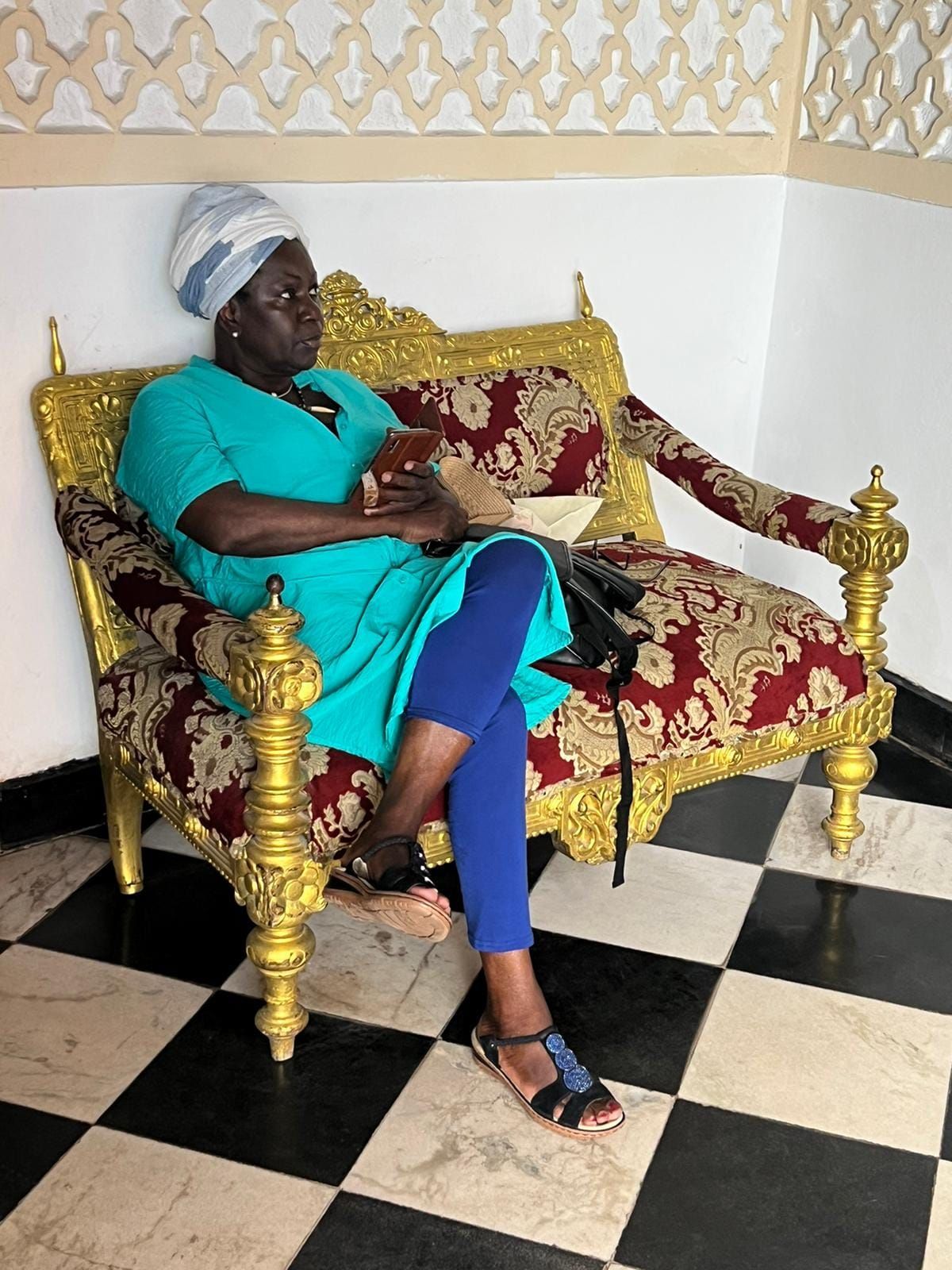
Once upon a time, there lived a widow at the edge of a small village. She had two sons and a daughter. Life had never been kind to her. She lived in a small, run-down house, surrounded by fields that always seemed to demand more than she could offer. Every night, she went to bed not knowing what the next day would bring.
One day, her eldest son sat beside her.
“Mama,” he said softly, “I shall go to the city and look for a job. Otherwise, we will all die here.”
The widow listened in silence. Her heart was heavy, because her husband had died in that same city. But she knew she could not hold him back. She placed her trembling hand upon his head and blessed him.
“Go, my son. May God protect you. May you find work and return to us.”
After she spoke, her son left for the city, leaving behind his brother, his sister, and his mother.
Days became weeks, Weeks became months. But there was no word from him.
The widow waited. Every evening, she sat at the doorway, facing the road that descended from the hills. She listened carefully whenever she heard footsteps. But her son never came.
His absence did not improve the family's condition. It made it worse. There was now one less pair of hands to work the land, one less person to search for food, and one less voice in the little thatched house.
After several months, her second son could no longer bear watching his mother struggle.
“Mama,” he said, “I must go and look for my brother. Perhaps something has happened to him. I will find him and bring him home.”
The widow's eyes filled with tears. She knew the road to the city was long and dangerous. She also knew that if another child left, the house would feel even more empty. She placed her hand upon his head.
“Go, my son. May God guide your feet and bring you safely back to me.”
He left with little more than a bottle of water. The widow watched until his figure disappeared down the road.
Then she waited. Weeks passed. Then months. Then years. Neither son returned.
The widow was now blind and walked with a painful limp. Years of hard farm work had broken down her body. Her hands were rough, her back was bent, and every step required effort. Yet she continued working. She had no choice. She still had her daughter to fend for.
Every evening, after she and her daughter had eaten, she would make her slow way to the doorway. There she would sit, facing the road. She could not see it, but she knew its shape. Perhaps today. Perhaps today, one of her sons would return. But the footsteps always belonged to someone else.
Then, one afternoon, a stranger appeared at the widow's door. The man held a letter.
The widow heard the stranger greet her and asked what she wanted.
“A letter has come for you,” the stranger said.
The widow's heart began to beat faster. She reached out with trembling hands.
“I cannot read,” she whispered. “My eyes…”
Her daughter took the letter.
“Read it to me,” the widow said.
The daughter opened it.
Her eyes moved slowly across the page.
Then she began.
“Dear Mama,
I hope you and our sister are doing fine.
It has been years since I last saw you both, and I miss you and our sister very much.
When I came to the city, I found work with a transport company. Many people warned me about that company, but I did not listen. I needed money, Mama. I needed it quickly. I am sorry that I never sent anything home.
When my brother found me, I brought him to my boss. My boss gave him the same job, asked him to join me at his quarters where I stayed, and promised to pay us. Instead, he only gave us empty promises. “
“You have a roof and food.” He would shout at us. We have been working from sunrise to sunset without rest or pay.
Mama, I am writing this letter from prison. My brother is sitting beside me.
We have been accused of drug smuggling. We did not know what we were carrying. The drugs belonged to our boss, but he has denied everything and placed the blame upon us. We have been sentenced to death.
By the time this letter reaches you, we may already be gone. Mama, we have one final request.
If there is any way you can release our sister so that she may come to the city and say goodbye to us, please let her come. We want to see her one last time.
Your sons.”
The daughter stopped reading. The house became completely silent. The widow sat motionless. For several seconds, she did not speak. Then she whispered:
“Read it again.”
Her daughter began again.
But this time, the widow understood every word before her daughter spoke them.
Her two sons were alive. They had found each other. And now they were waiting to die.
The widow's hands began to tremble violently. She reached toward her daughter.
“My sons…” Her voice broke. “My sons found each other.” Then she began to cry.
It was not the loud cry of someone hearing bad news, but the quiet, tired weeping of a mother whose heart had suffered for too long.
She had waited for years to hear their footsteps. She had imagined them returning to the village. She had imagined embracing them. She had imagined cooking for them again.
And now she knew the truth. They would never come home.
And now her sons were asking her to send her daughter away too.
For the first time, the widow knew what it meant to have nothing left to lose.
She clung to her daughter as though the girl were the last piece of her soul.
“No,” she whispered. Then louder: “No. I cannot lose you too.”
But the daughter was already crying. The letter had asked her to go.
Her brothers wanted to see her. And the widow knew that, somehow, she had to let her daughter make that journey.
She spent that night awake.
She sat beside the doorway, staring into the darkness she could not see.
The following morning, her daughter prepared to leave.
The widow held her for a long time. She touched her daughter's face with both hands, trying to remember every detail with her fingertips.
“My child,” she whispered, “come back to me.”
“I will, Mama.”
Her daughter left.
The widow remained at the doorway.
She listened to the footsteps fading down the road. One step. Then another.
Until there was nothing.
A few days passed. Then weeks.
Then one evening, a group of villagers came to her house.
They stood outside without speaking.
The widow knew immediately that something terrible had happened.
“My daughter?” she asked.
Nobody answered.
“My daughter has returned?”
Still, nobody spoke. Her voice trembled.
“Where is my daughter?”
At last, someone whispered the words.
She had been murdered on the road to the city. The very day she left.
The widow's face went blank.
The mother slowly lowered herself to the ground.
She did not cry. “My children…” “My children…” “My children…”
That night, something inside her finally broke.
From then on, the widow was only a shadow of the woman she used to be. Her sons were dead. Her daughter was dead. And she was still alive. That became her punishment. Every morning, she woke up expecting to hear one of their voices.
Every evening, she sat at the doorway and faced the road.
She was blind, but somehow, she still looked toward it.
She waited for footsteps that would never come.
The villagers began to worry about her, but the widow was now in a place they could not reach.
The widow grew weaker. Her once powerful hands became thin and fragile.
Her back bent further. Her footsteps grew so quiet they could hardly be heard.
She could no longer work the farm. She could barely cross the room.
Still, every evening, she crawled toward the doorway and sat there.
Waiting. Always waiting.
One cold evening, she whispered the names of her children one last time.
She smiled faintly. For the first time in years, she imagined them together.
Not in prison. Not on the road. Not in graves. Together. Waiting for her.
Her head gently rested against the wall.
Her breathing became softer.
The village slept.
No child held her hand.
No daughter watched over her.
No son called her name. The widow died alone in her small house at the edge of the village.
And when morning came, the road was still there.
Silent. Empty. Waiting.
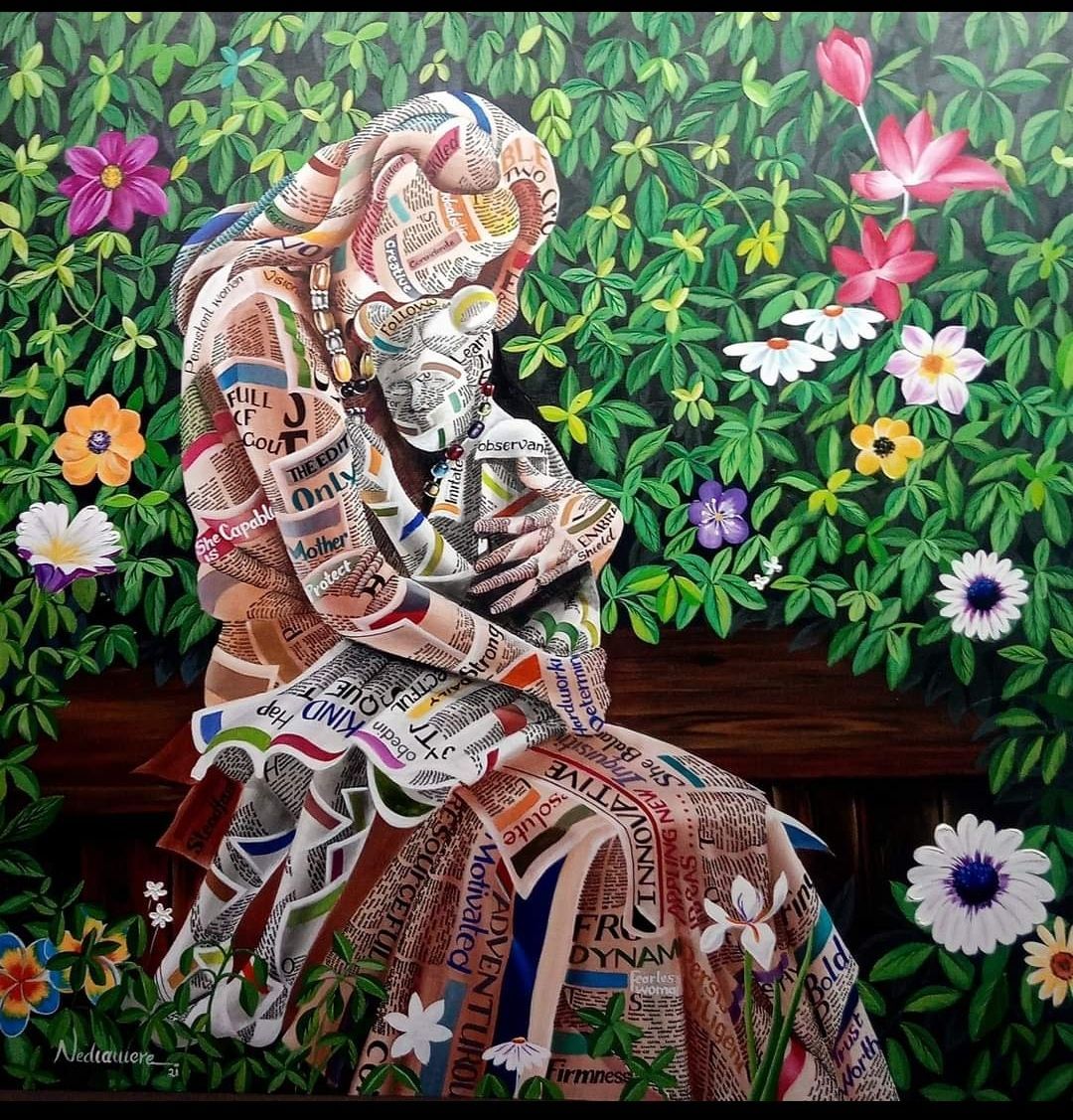
Perhaps the widow was never only a widow. Perhaps she was Africa.
And perhaps the little house at the edge of the village was not merely a house.
Perhaps it was the continent itself.
For centuries, Africa stood at the doorway and watched her children disappear.
They did not leave because they wanted to. They were forcefully taken.
They did not leave carrying bags, saying goodbye, promising to return when they had found work. They were taken and taken from their mothers and taken from their fathers.
Taken from their brothers and sisters. Taken from their villages.
Taken from the fields where they had been born.
Taken from the rivers where they had washed.
Taken from the songs they knew.
Taken from the graves of their ancestors.
And unlike the widow in the story, Africa never received a letter.
No explanation. No final embrace.
No promise that her children would return.
The deepest wounds of the slave trade were not just that millions of Africans were taken, but that millions more were left behind to live with their absence.
History can count the ships and the people transported.
It can calculate the economic value of human beings who were bought and sold.
But numbers cannot measure the mother who waited, and the pain she underwent.
Numbers cannot record the brother who kept looking toward the road.
They cannot describe the empty place beside a fire where someone once sat.
Numbers cannot record the songs that stopped being sung because the person who knew them had been taken away.
Numbers cannot show how lonely a whole continent can feel.
The kidnapping of Africans was therefore not only the removal of bodies.
It was the tearing apart of relationships.
The disappearance left space. One space became millions
And millions of empty spaces became a wound that stretched across a continent.
Africa continued.
The fields still had to be cultivated. Children still had to be born. The rains still came.
The rivers still flowed. People still gathered around fires.
But something had changed.
The mother was no longer waiting for one child.
She was waiting for generations.
The widow lost three children. Africa lost countless sons and daughters.
The widow’s house became quiet. Africa’s communities were fractured.
The widow wondered whether her children were alive. Africa was separated from her children by an ocean.
The widow had no grave to visit. Many families had no idea where their stolen children had died.
The widow carried the memory of her children until death. Africa carried her memory through generations.
And perhaps the greatest cruelty was that the stolen children were not just taken from Africa physically.
They were forced into a new world where their names could be changed, their languages silenced, their families erased, and their histories denied.
They survived in the bodies and memories of descendants who would one day ask:
“Where did we come from?”
And perhaps that question is Africa’s children standing at the edge of history, looking back across the ocean.
“Mother, where are you?”
And Africa, wounded psychologically, culturally, spiritually, and exhausted, answers:
“I have been waiting for you.”
The widow in the story eventually dies alone, but Africa did not die.
She endured. She mourned. She remembered.
She gave birth again. She rebuilt villages.
She raised new generations. She preserved what could be preserved.
She carried memories that others tried to erase.
Abduction gives a family an empty doorway.
And an empty doorway can be haunted for generations.
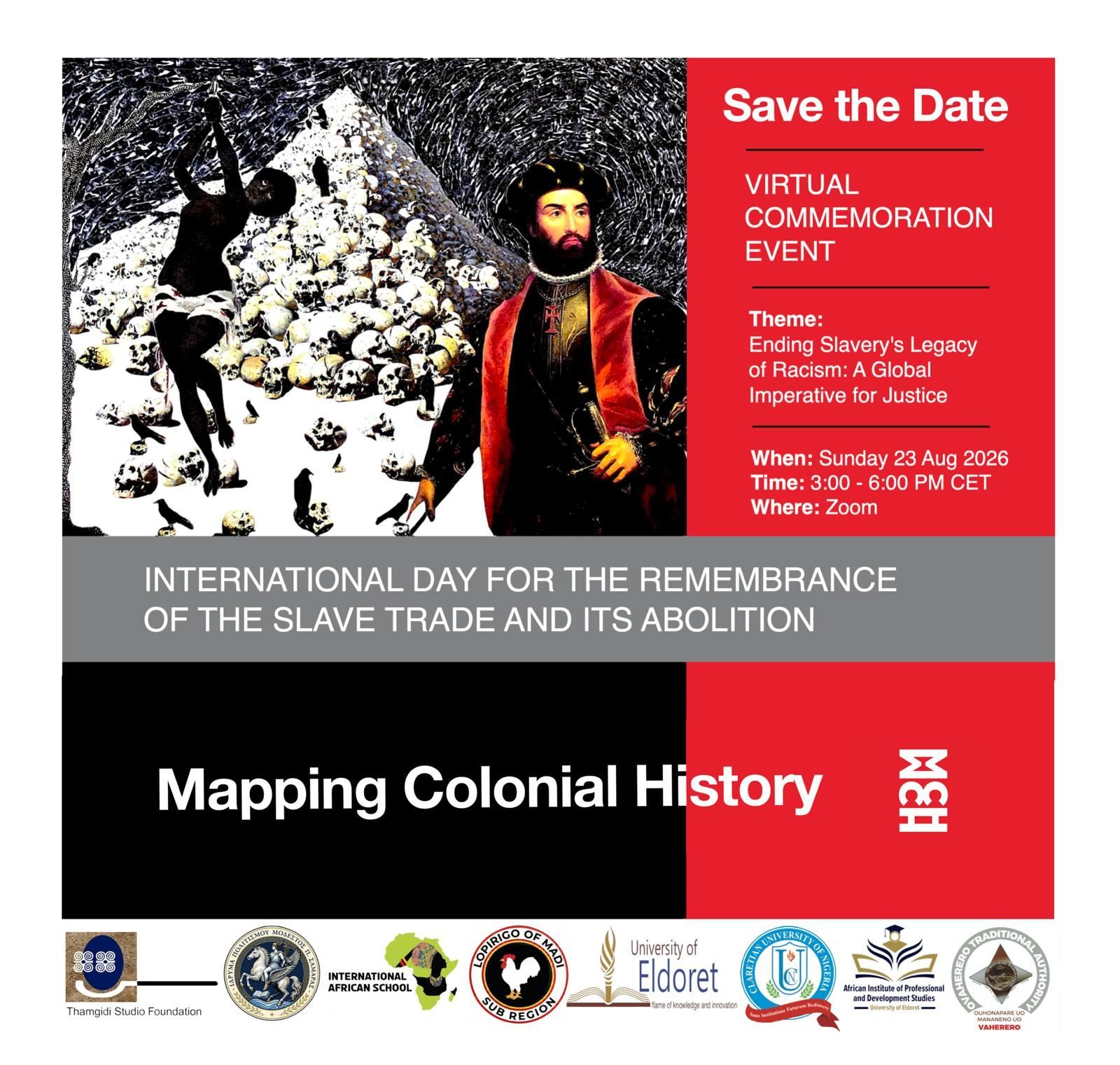
So, when we speak about the transatlantic and the Indian Ocean slave trade, we should not imagine only ships crossing an ocean.
We should imagine the mother standing at the doorway.
Blind with grief.
Waiting.
Listening.
Hoping.
Calling names that receive no answer.
We should imagine an entire continent standing behind her.
And behind that continent, millions of mothers.
Still waiting.
Still remembering.
Still asking the question that history can never fully answer:
“Where did my children go?