As I sit here in Washington, D.C., reflecting on the end of my holiday, I find myself looking back on my two-week journey of discovery and learning in the land of the free and the brave—America. Initially, I was apprehensive about coming here because of what we often see and hear on television. However, as I traveled across this vast country, my fears gradually faded. Just as I began to truly settle in and enjoy America, it was time to leave.
Beyond visiting friends, my primary goal was to deepen my understanding of African American history. What truly happened to those of us who were forcibly taken from our homes and villages in Africa? This question has long haunted me. While I have read many accounts, this trip was my chance to see, hear, feel, and retrace the steps of those once considered less than human.
My journey began at Monticello, Thomas Jefferson’s historic estate. As we drove up the lush, tree-lined hill surrounded by tranquil greenery, I was struck by the immense wealth and influence Jefferson possessed. He was a Founding Father, principal author of the Declaration of Independence (1776), and the third President of the United States (1801–1809).
"We hold these truths to be self-evident: that all men are created equal..." and "it is the great parent of science & of virtue: and that a nation will be great in both, always in proportion as it is free." These famous words by Jefferson are often quoted by politicians. But did he truly mean them? The stories I heard at Monticello were heartbreaking—accounts of families torn apart, forced wet nursing, and relentless hard labor endured by the enslaved.
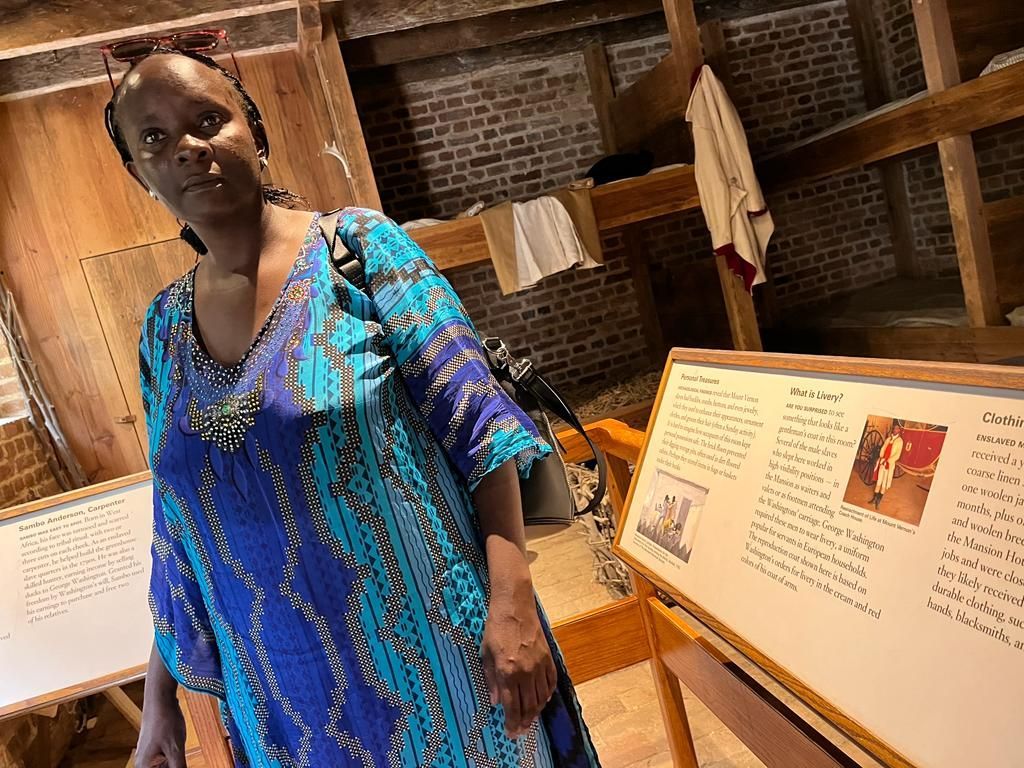
George Washington, though often compared to Jefferson, had his own complex legacy. The grand house and scenic waters of Mount Vernon evoked memories of European castles. Yet, the presence and legacy of enslaved people were palpable—visible, raw, and haunting. Washington, who enslaved people for 56 years, struggled with the morality of slavery and expressed his wish to end it. In his 1799 will, he made the unprecedented decision to free all the enslaved people he owned.
The highlight of my journey was visiting the Harriet Tubman Underground Railroad National Historic Park. Harriet Tubman is a figure I deeply admire. Known as the “Moses of her people,” she escaped enslavement herself and went on to help many others find freedom as a conductor on the Underground Railroad. Despite having no formal education, she believed in her ability to transform others' lives.
At the Sandy Spring Slave Museum and African Art Gallery in Maryland, just outside Washington, D.C., the collection of wood carvings and architectural features crafted by African artists was truly a sight to behold. Their sheer genius and creativity left a lasting impression on me.
In conclusion, I echo the famous Swahili saying,
“Kutembea kwingi kuona mengi”—to travel is to see and learn much. I have witnessed firsthand and learned lessons I was never taught in school.