


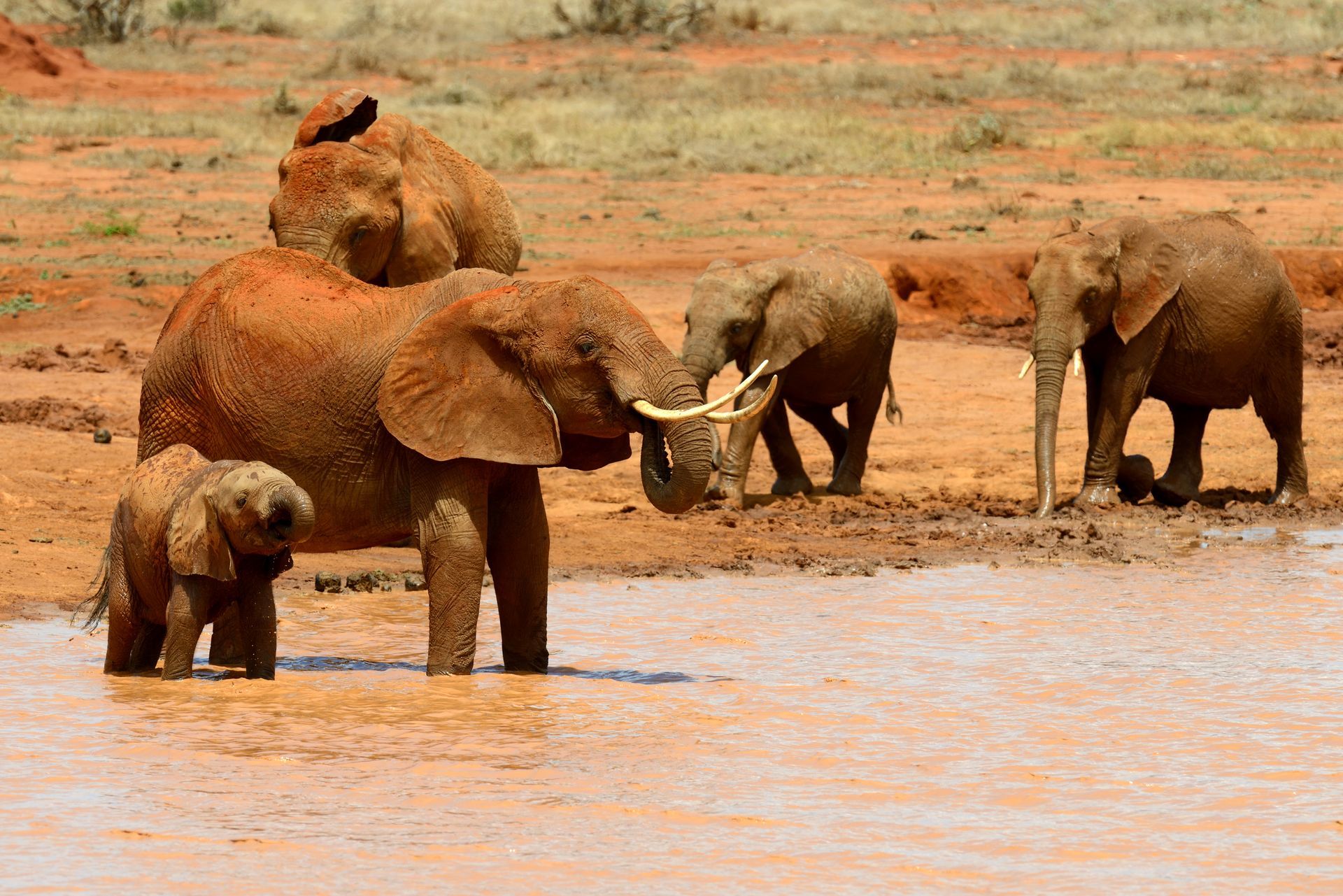
The Elephant People of Tsavo On a hot day in Tsavo, Galgalo sits among his peers while the simmering hours pass. The top agenda of their discussion this afternoon is the number of elephants each has slain in their lifetime. Galgalo’s toll supersedes everyone else’s. Hunting elephants for game meat has, sadly, been the way of life for the Watha community, known by another name: The Elephant People. Things have, however, not been usual this past decade, as concerns have arisen over the rapid decline in elephant numbers with each passing day. The Watha is an indigenous Cushitic group that has lived near the wild for centuries. They are found in the biodiversity-rich, forested hills of Kilibasi in Kwale County, as well as in Coastal forests including the Arabuko Sokoke, parts of Kilifi, Marsabit, Lamu, and Tana River in Kenya. Their story began in the 1950s, when the area they called home was set aside to create the current Tsavo East National Park. Although the government’s need for conservation was met, the Watha community was left in limbo, as their dependence on bushmeat, honey, and firewood was significantly impacted. The struggle to adapt to new ways of survival, therefore, began in earnest, a journey that took a toll on them because of a deeply ingrained belief that the life of elephants in Tsavo was inextricably linked to their fate. According to the Watha story of God’s creation, elephant dung is a partial fulfillment of the sacred covenant between their society and the elephant. This, they posit, explains their intimate knowledge of the bush, from the ability to describe the peculiar behavior of individual elephants to navigate both their paths and those of other animals with ease. One of the traditional Watha practices includes cultural dances performed after every successful elephant hunt, accompanied by triumphal songs to praise the elephant for providing food for their community. For the sake of herd continuity, hunters like Galgalo were only allowed to prey on bull elephants, as it was an abomination to kill female elephants for food. Apart from the meat, elephant tusks were used for a bride price or for barter trade in exchange for cloth, tools, and ornaments. Things are different now as the government continues to implement measures aimed at conserving natural resources. What was initially a source of community pride and nourishment is now synonymous with arrests, detainment, and imprisonment. Left without alternative means of livelihood, the Watha have been struggling to adapt to a new way of life through subsistence farming on small tracts of land. This has led to the population of the once-robust community dropping exponentially as climate change, poverty, illiteracy, and unemployment ravage the Elephant People. But all is not lost. Their one-time vast knowledge of the bush is slowly being replaced with formal education, and the pen has overtaken their prowess with the spear. It has been a journey of discovery, opening new frontiers and broadening eyes to a new world; it is expected to bring forth a new generation that will protect rather than harm or kill game animals. With each new dawn, Galgalo and his ilk will have to slowly but surely find new topics to discuss at their under-the-rock meetings, as keeping lists of elephants killed will no longer be something to boast about.

Tribute to Professor Ngugi wa Thiong’o
The Elephant People of Tsavo On a hot day in Tsavo, Galgalo sits among his peers while the simmering hours pass. The top agenda of their discussion this afternoon is the number of elephants each has slain in their lifetime. Galgalo’s toll supersedes everyone else’s. Hunting elephants for game meat has, sadly, been the way of life for the Watha community, known by another name: The Elephant People. Things have, however, not been usual this past decade, as concerns have arisen over the rapid decline in elephant numbers with each passing day. The Watha is an indigenous Cushitic group that has lived near the wild for centuries. They are found in the biodiversity-rich, forested hills of Kilibasi in Kwale County, as well as in Coastal forests including the Arabuko Sokoke, parts of Kilifi, Marsabit, Lamu, and Tana River in Kenya. Their story began in the 1950s, when the area they called home was set aside to create the current Tsavo East National Park. Although the government’s need for conservation was met, the Watha community was left in limbo, as their dependence on bushmeat, honey, and firewood was significantly impacted. The struggle to adapt to new ways of survival, therefore, began in earnest, a journey that took a toll on them because of a deeply ingrained belief that the life of elephants in Tsavo was inextricably linked to their fate. According to the Watha story of God’s creation, elephant dung is a partial fulfillment of the sacred covenant between their society and the elephant. This, they posit, explains their intimate knowledge of the bush, from the ability to describe the peculiar behavior of individual elephants to navigate both their paths and those of other animals with ease. One of the traditional Watha practices includes cultural dances performed after every successful elephant hunt, accompanied by triumphal songs to praise the elephant for providing food for their community. For the sake of herd continuity, hunters like Galgalo were only allowed to prey on bull elephants, as it was an abomination to kill female elephants for food. Apart from the meat, elephant tusks were used for a bride price or for barter trade in exchange for cloth, tools, and ornaments. Things are different now as the government continues to implement measures aimed at conserving natural resources. What was initially a source of community pride and nourishment is now synonymous with arrests, detainment, and imprisonment. Left without alternative means of livelihood, the Watha have been struggling to adapt to a new way of life through subsistence farming on small tracts of land. This has led to the population of the once-robust community dropping exponentially as climate change, poverty, illiteracy, and unemployment ravage the Elephant People. But all is not lost. Their one-time vast knowledge of the bush is slowly being replaced with formal education, and the pen has overtaken their prowess with the spear. It has been a journey of discovery, opening new frontiers and broadening eyes to a new world; it is expected to bring forth a new generation that will protect rather than harm or kill game animals. With each new dawn, Galgalo and his ilk will have to slowly but surely find new topics to discuss at their under-the-rock meetings, as keeping lists of elephants killed will no longer be something to boast about.
Tribute to Professor Ngugi wa Thiong’o