Tribute to Professor Ngugi wa Thiong’o


The passing of Professor Ngugi wa Thiong’o is a profound loss for African literature, languages, and the humanities — a loss that resonates deeply with me.

Years ago, as an aspiring writer navigating the uncertainties of the publishing industry, I felt adrift and desperately in need of mentorship. During this time, I had a pivotal meeting with Mukoma wa Ngugi at the Winternachten Festival in The Hague in 2019. After reviewing my work, he generously shared his father’s contact information and encouraged me to reach out to him. I remain immensely grateful to Mukoma for his kindness.


Initially, I feared making that call and sought guidance from various sources instead. But during a particularly challenging moment, I recalled Professor Ngugi’s number. I gathered my courage and made the call, fully prepared for rejection.

In our first conversation, I introduced myself and shared my writing journey. To my astonishment, he was incredibly supportive and offered me invaluable advice. He asked me to send him my Swahili work.


He was thrilled and offered to write a foreword for my books. This led to our bi-weekly phone calls.

When friends asked about my Saturday evening plans, I would often reply, proudly, “I’ll be having a call with Prof. Ngugi,” which usually elicited disbelief.


Our conversations were simple yet deeply enriching. I would update him on my writing progress. He would say, “Anyachi, don’t forget your mother tongue… your mother tongue, please…” I assured him that I would write in my mother tongue, too.

He shared captivating, nostalgic stories from his life in Tigoni. One particularly memorable tale was about his mother. “That lady had supernatural powers,” he began.
He recounted a night, when he was around 13 years old, that he stayed at a friend’s house. They had lit a jiko for warmth against the biting July cold in Limuru. Later, they went to bed, leaving it burning. In the dead of night, his mother knocked fiercely on the wooden door, waking him. His head was foggy, but he struggled and dragged himself to open the door because he recognized his mother’s voice.
His mother had sensed that her son was in danger and had walked five kilometres through the darkness to rescue him. Leaving the door wide open, she rushed to his friend, shook him awake, and dragged him outside. That night, she saved two young men from suffocating — one of whom would go on to inspire generations of African scholars and writers.


These stories, along with the many informal lessons from our conversations, will stay with me forever. Though we never met face-to-face, our bond evolved into one akin to that of a father and mentor, significantly enriching my literary journey. His wisdom, laughter, and constructive criticism came from a place of deep experience and generosity.

Just last week, I finished translating my first-ever children’s book, Nasuma and the Ogres. I called him last Sunday to share the great news. I could hear he was in a noisy place. He said jovially, “Anyachi, let me call you back…” Those were his last words to me.

Professor Ngugi dedicated his life to instilling self-worth and pride in our African heritage. His relentless advocacy for preserving our African languages and revitalizing African academia cannot be overstated. Ignoring his noble fight would be a disservice to his legacy.


Another essential but underestimated virtue was his availability and accessibility to anyone who sought his audience. He was ready to guide and inspire freely, and without ever demanding compensation for his wisdom.

Today, we face a crisis of intergenerational mentorship—a vital tool for preserving African heritage and understanding the place of African and Black people in the world. This is one of the significant challenges that Mwalimu Ngugi has left us with: a challenge to those who have “made it” and broken the ceiling:

Are you mentoring a young one freely, or are you gatekeeping?

My humble plea to Generation X is this: We are the last generation that still holds the wisdom of our ancestors. Do you think we could pass it on? Time is running out.


May Prof. Ngugi rest in eternal peace, even as his legacy lives on forever in all of us whose lives he touched!


By Brenda Okumu June 29, 2025
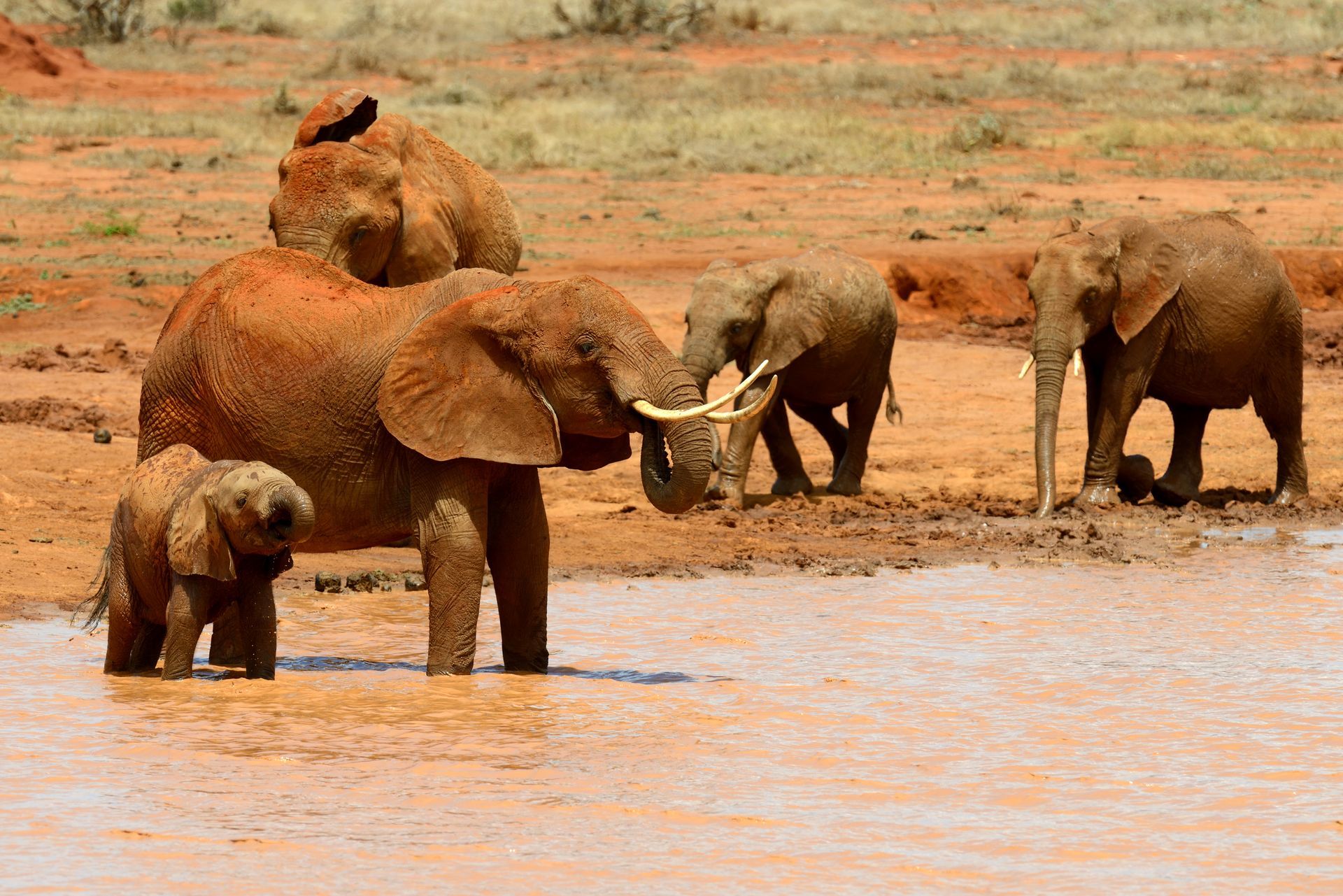
The Elephant People of Tsavo On a hot day in Tsavo, Galgalo sits among his peers while the simmering hours pass. The top agenda of their discussion this afternoon is the number of elephants each has slain in their lifetime. Galgalo’s toll supersedes everyone else’s. Hunting elephants for game meat has, sadly, been the way of life for the Watha community, known by another name: The Elephant People. Things have, however, not been usual this past decade, as concerns have arisen over the rapid decline in elephant numbers with each passing day. The Watha is an indigenous Cushitic group that has lived near the wild for centuries. They are found in the biodiversity-rich, forested hills of Kilibasi in Kwale County, as well as in Coastal forests including the Arabuko Sokoke, parts of Kilifi, Marsabit, Lamu, and Tana River in Kenya. Their story began in the 1950s, when the area they called home was set aside to create the current Tsavo East National Park. Although the government’s need for conservation was met, the Watha community was left in limbo, as their dependence on bushmeat, honey, and firewood was significantly impacted. The struggle to adapt to new ways of survival, therefore, began in earnest, a journey that took a toll on them because of a deeply ingrained belief that the life of elephants in Tsavo was inextricably linked to their fate. According to the Watha story of God’s creation, elephant dung is a partial fulfillment of the sacred covenant between their society and the elephant. This, they posit, explains their intimate knowledge of the bush, from the ability to describe the peculiar behavior of individual elephants to navigate both their paths and those of other animals with ease. One of the traditional Watha practices includes cultural dances performed after every successful elephant hunt, accompanied by triumphal songs to praise the elephant for providing food for their community. For the sake of herd continuity, hunters like Galgalo were only allowed to prey on bull elephants, as it was an abomination to kill female elephants for food. Apart from the meat, elephant tusks were used for a bride price or for barter trade in exchange for cloth, tools, and ornaments. Things are different now as the government continues to implement measures aimed at conserving natural resources. What was initially a source of community pride and nourishment is now synonymous with arrests, detainment, and imprisonment. Left without alternative means of livelihood, the Watha have been struggling to adapt to a new way of life through subsistence farming on small tracts of land. This has led to the population of the once-robust community dropping exponentially as climate change, poverty, illiteracy, and unemployment ravage the Elephant People. But all is not lost. Their one-time vast knowledge of the bush is slowly being replaced with formal education, and the pen has overtaken their prowess with the spear. It has been a journey of discovery, opening new frontiers and broadening eyes to a new world; it is expected to bring forth a new generation that will protect rather than harm or kill game animals. With each new dawn, Galgalo and his ilk will have to slowly but surely find new topics to discuss at their under-the-rock meetings, as keeping lists of elephants killed will no longer be something to boast about.
By James Williams June 29, 2025
Write about something you know. If you don’t know much about a specific topic that will interest your readers, invite an expert to write about it.
By Brenda Okumu June 29, 2025
The Elephant People of Tsavo On a hot day in Tsavo, Galgalo sits among his peers while the simmering hours pass. The top agenda of their discussion this afternoon is the number of elephants each has slain in their lifetime. Galgalo’s toll supersedes everyone else’s. Hunting elephants for game meat has, sadly, been the way of life for the Watha community, known by another name: The Elephant People. Things have, however, not been usual this past decade, as concerns have arisen over the rapid decline in elephant numbers with each passing day. The Watha is an indigenous Cushitic group that has lived near the wild for centuries. They are found in the biodiversity-rich, forested hills of Kilibasi in Kwale County, as well as in Coastal forests including the Arabuko Sokoke, parts of Kilifi, Marsabit, Lamu, and Tana River in Kenya. Their story began in the 1950s, when the area they called home was set aside to create the current Tsavo East National Park. Although the government’s need for conservation was met, the Watha community was left in limbo, as their dependence on bushmeat, honey, and firewood was significantly impacted. The struggle to adapt to new ways of survival, therefore, began in earnest, a journey that took a toll on them because of a deeply ingrained belief that the life of elephants in Tsavo was inextricably linked to their fate. According to the Watha story of God’s creation, elephant dung is a partial fulfillment of the sacred covenant between their society and the elephant. This, they posit, explains their intimate knowledge of the bush, from the ability to describe the peculiar behavior of individual elephants to navigate both their paths and those of other animals with ease. One of the traditional Watha practices includes cultural dances performed after every successful elephant hunt, accompanied by triumphal songs to praise the elephant for providing food for their community. For the sake of herd continuity, hunters like Galgalo were only allowed to prey on bull elephants, as it was an abomination to kill female elephants for food. Apart from the meat, elephant tusks were used for a bride price or for barter trade in exchange for cloth, tools, and ornaments. Things are different now as the government continues to implement measures aimed at conserving natural resources. What was initially a source of community pride and nourishment is now synonymous with arrests, detainment, and imprisonment. Left without alternative means of livelihood, the Watha have been struggling to adapt to a new way of life through subsistence farming on small tracts of land. This has led to the population of the once-robust community dropping exponentially as climate change, poverty, illiteracy, and unemployment ravage the Elephant People. But all is not lost. Their one-time vast knowledge of the bush is slowly being replaced with formal education, and the pen has overtaken their prowess with the spear. It has been a journey of discovery, opening new frontiers and broadening eyes to a new world; it is expected to bring forth a new generation that will protect rather than harm or kill game animals. With each new dawn, Galgalo and his ilk will have to slowly but surely find new topics to discuss at their under-the-rock meetings, as keeping lists of elephants killed will no longer be something to boast about.
By James Williams June 29, 2025
Write about something you know. If you don’t know much about a specific topic that will interest your readers, invite an expert to write about it.